Best Cardio for Weight Loss Beginners: Simple Guide
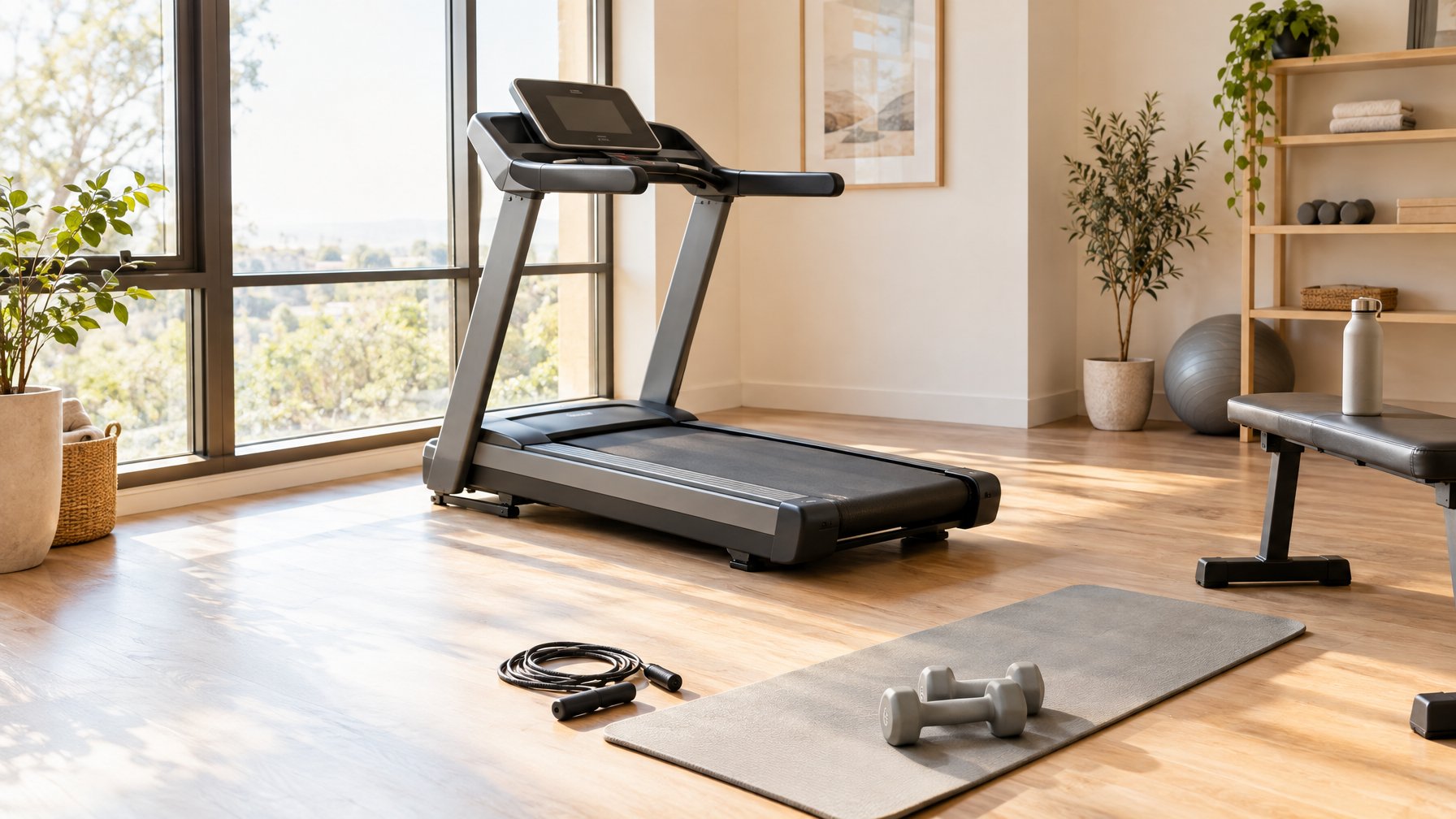
Brisk walking, ideally on an incline, is the best cardio for weight loss beginners, because it burns meaningful calories, asks almost nothing of the joints, and can be repeated five or six days a week without the soreness that makes people quit in week two.
That recommendation suits anyone who has been inactive for months, carries extra weight, or has had knee or hip trouble. Walking is also the only form of cardio most people already know how to do correctly, which removes the learning curve that stalls treadmill and rowing beginners.
Cardio contributes to weight loss by adding to the calorie deficit that drives fat loss. It works alongside what someone eats, not in place of it, and the sessions that get repeated for months matter more for results than the single hardest workout someone can survive once.
Anyone managing diabetes, hypertension, heart disease, or joint injuries should talk with a clinician before starting a new exercise routine.
Key Takeaways
- Walking, cycling, swimming, and the elliptical give beginners a low-impact way to burn calories without wrecking recovery.
- Intensity is easiest to control with the talk test: moderate effort means speaking in short sentences but not singing.
- Building from 15 minutes three times a week to 30 minutes five times a week over a month is a realistic starting progression.
Which Cardio Options Work Best When You Are Starting Out?
The best beginner cardio workouts share three traits: low joint impact, a pace that can be adjusted mid-session, and no technical skill requirement. Walking, stationary cycling, swimming, and elliptical training all qualify, and each one scales up as fitness improves.
Running, jump rope, and HIIT are effective calorie burners, but they place the highest demand on joints and recovery, which is why they belong later in a beginner's timeline.
Walking and Incline Walking: The Most Accessible Starting Point
Walking requires no equipment, no gym membership, and no skill acquisition. The CDC recommends a 30-minute walk five days a week, and the benefits of that habit include weight maintenance, better mood, and lower chronic disease risk, as Prevention's roundup of trainer-recommended cardio notes.
Adding incline is the simplest way to increase difficulty without increasing impact. On a treadmill, a 2 to 4 percent grade at the same speed raises heart rate noticeably; outdoors, a hilly route does the same thing for free.
A practical treadmill starting point: 3 minutes at 2.5 mph, 4 minutes at 3.0 to 3.5 mph with light incline, 3 minutes slower, then 3 minutes flat and gentle, as laid out in this beginner machine guide. Total time, 13 minutes.
Cycling, Swimming, and Elliptical Training for Low-Impact Exercise
These three options remove most of the ground impact while still engaging large muscle groups, which is where the calorie burn comes from.
A stationary bike supports the lower back and keeps the knees in a controlled path, and a recumbent version adds more support still. Ten minutes broken into 3 minutes low resistance, 4 minutes moderate, and 3 minutes cooldown is enough for a first week.
Swimming suits anyone carrying extra weight or dealing with joint pain, and the Cleveland Clinic considers it a gentle but effective option. A 154-pound person swimming slow freestyle laps for 30 minutes burns roughly 255 calories by CDC estimates.
The elliptical keeps the feet on the pedals throughout, involves the upper body, and lets resistance climb without any pounding. Keep the knees soft and rest the hands lightly on the handlebars instead of gripping and leaning.
A stair climber belongs in this group with one caveat: it is harder than it looks, because the body is lifting its own weight against gravity on every step. Posture stays upright, and handrails are for balance only.
At-Home Cardio Moves for Small Spaces and No Equipment
Bodyweight cardio works in a space the size of a yoga mat. Marching in place, jumping jacks, high knees, step-ups on a sturdy stair, bodyweight squats, lunges, and a plank hold can be combined into a circuit that needs nothing but a timer.
A workable format for a first month: 30 seconds of work, 45 to 60 seconds of rest, six to eight movements, repeated twice. Jumping jacks in three sets of 30 seconds with 45 seconds of rest is a reliable way to raise heart rate quickly.
Dance-based options count too. Zumba, step aerobics, and a 15-minute freestyle session in the kitchen all register as moderate-intensity cardio, and the fact that people enjoy them is a practical advantage over anything they dread.
Burpees and mountain climbers show up in a lot of beginner lists, but both combine impact with a plank position that demands core control most beginners have not built yet. They are worth delaying a few weeks.
When Running, Jump Rope, and HIIT Make Sense
These earn a place once someone can walk briskly for 30 continuous minutes without soreness the next day, which takes most beginners four to eight weeks.
The CDC classifies running and jump rope as vigorous activity, meaning 75 minutes a week meets the aerobic guideline instead of 150. Jogging is often introduced through walk-jog intervals: 1 minute of easy jogging inside a 5-minute walking block, repeated a few times.
HIIT does produce results. A 2024 systematic review in Nature found males lost 6.67 percent body fat with HIIT compared with 2.74 percent from steady-state cardio, as summarized in this science-backed fat loss guide. That review looked at structured programs, not first-week exercisers.
A gentle entry point: 20 seconds of fast marching, 40 seconds of rest, five to ten rounds. Sprint intervals, squat jumps, and boxing circuits can follow once the base is there. Anyone with existing knee pain should stay with low-impact work and skip the jumping variations.
How to Build a Cardio Routine That Supports Fat Loss
A beginner routine that supports fat loss has four parts: a controllable intensity, a gradual weekly progression, a calorie deficit from food, and enough recovery to keep showing up. Three to five sessions a week of 20 to 40 minutes covers most people starting out.
Choose an Intensity You Can Control With the Talk Test
Moderate intensity means being able to talk but not sing, which corresponds to roughly 70 to 80 percent of maximum heart rate or a 5 to 7 on a perceived exertion scale, according to this cardio workout plan breakdown.
The 220-minus-age formula for maximum heart rate is a rough estimate that misses for plenty of individuals, so the talk test stays more useful than a number on a watch.
Lower-intensity work at 60 to 70 percent of max heart rate does burn a higher percentage of calories from fat, and about 65 percent of calories in that zone come from fat oxidation. Higher intensities burn more total calories, which is what moves body fat over weeks, so neither zone is wasted.
A Four-Week Progression for Beginner Cardio
| Week | Sessions | Duration | Intensity |
|---|---|---|---|
| 1 | 3 | 15 min | Comfortable pace |
| 2 | 3 | 20 min | Comfortable to moderate |
| 3 | 4 | 25 min | Moderate |
| 4 | 5 | 30 min | Moderate, one session with short surges |
The American Heart Association's 150 minutes of moderate weekly activity is the target this progression reaches by week four. Adding five minutes per week is slow enough that soreness rarely accumulates.
Endurance training builds on itself: the same 30-minute walk that felt hard in week one requires less effort by week six, which is the signal to add incline, resistance, or minutes.
Pair Cardio With Nutrition and Strength Training
Cardio alone rarely produces large weight loss, because a 45-minute run burns somewhere in the range of 400 to 500 calories and is easy to eat back. The deficit comes primarily from food intake, with cardio widening it.
Two to three strength training sessions a week protect lean muscle during a deficit, and preserved muscle keeps basal metabolic rate higher than it would otherwise fall. Resistance training also improves how well the body tolerates cardio volume.
Non-exercise activity deserves attention too. Taking stairs, parking farther out, and walking during phone calls add hundreds of calories across a week without counting as workouts.
Warm Up, Recover, and Know When to Rest
Three to five minutes of marching in place, arm circles, light squats, and torso twists prepares joints and raises heart rate before the main session. A similar cool-down of slow walking plus 20 to 30 second stretches for calves, hips, and shoulders brings heart rate down and helps with next-day stiffness.
At least one full rest day per week is standard for beginners, and two is reasonable in the first month. Sleep quality does a large share of recovery work, and poor sleep shows up as heavier legs and flatter motivation within a few days.
Sharp or persistent joint pain is a stop signal, not something to push through. Mobility and flexibility work on rest days keeps the routine moving forward while tissue recovers.
Frequently Asked Questions
What is the easiest cardio for beginners to lose weight?
Brisk walking is the easiest starting option, since it needs no equipment and no technique practice. Thirty minutes at a pace where talking is possible but singing is not puts most beginners in the moderate-intensity range that counts toward the 150 weekly minutes health agencies recommend.
Will 30 minutes of cardio a day help burn body fat?
Yes, 30 minutes of moderate cardio burns roughly 200 to 400 calories depending on body weight and intensity, which adds up across a week. Fat loss still requires a calorie deficit overall, so the food side has to support what the training does.
Is walking enough cardio for weight loss?
Walking is sufficient cardio for weight loss when the weekly volume is high enough and eating supports a deficit. Progress usually comes from adding minutes, frequency, or incline over time, since the same 30-minute route gets easier as fitness improves.
How many days a week should a beginner do cardio?
Three days a week is a solid starting point, building toward four or five over the first month. Keep at least one full rest day, and add days before adding intensity, since frequency is easier to recover from than hard sessions.
What is the best low-impact cardio if I have knee pain?
A recumbent or stationary bike and swimming are the two most knee-friendly options, because neither involves ground impact and both keep the joint in a supported range of motion. The elliptical is a reasonable third choice since the feet stay on the pedals throughout.
Should beginners do cardio before or after strength training?
Strength training first is the better order when both happen in one session, so lifting quality is not compromised by fatigue. A 5 to 10 minute easy warm-up on a bike or treadmill before lifting works well, with longer cardio afterward or on separate days.
Related reading
Pair cardio with a beginner strength plan and steady walking habits, or browse more in the training hub.