Strength Training for Weight Loss Beginners
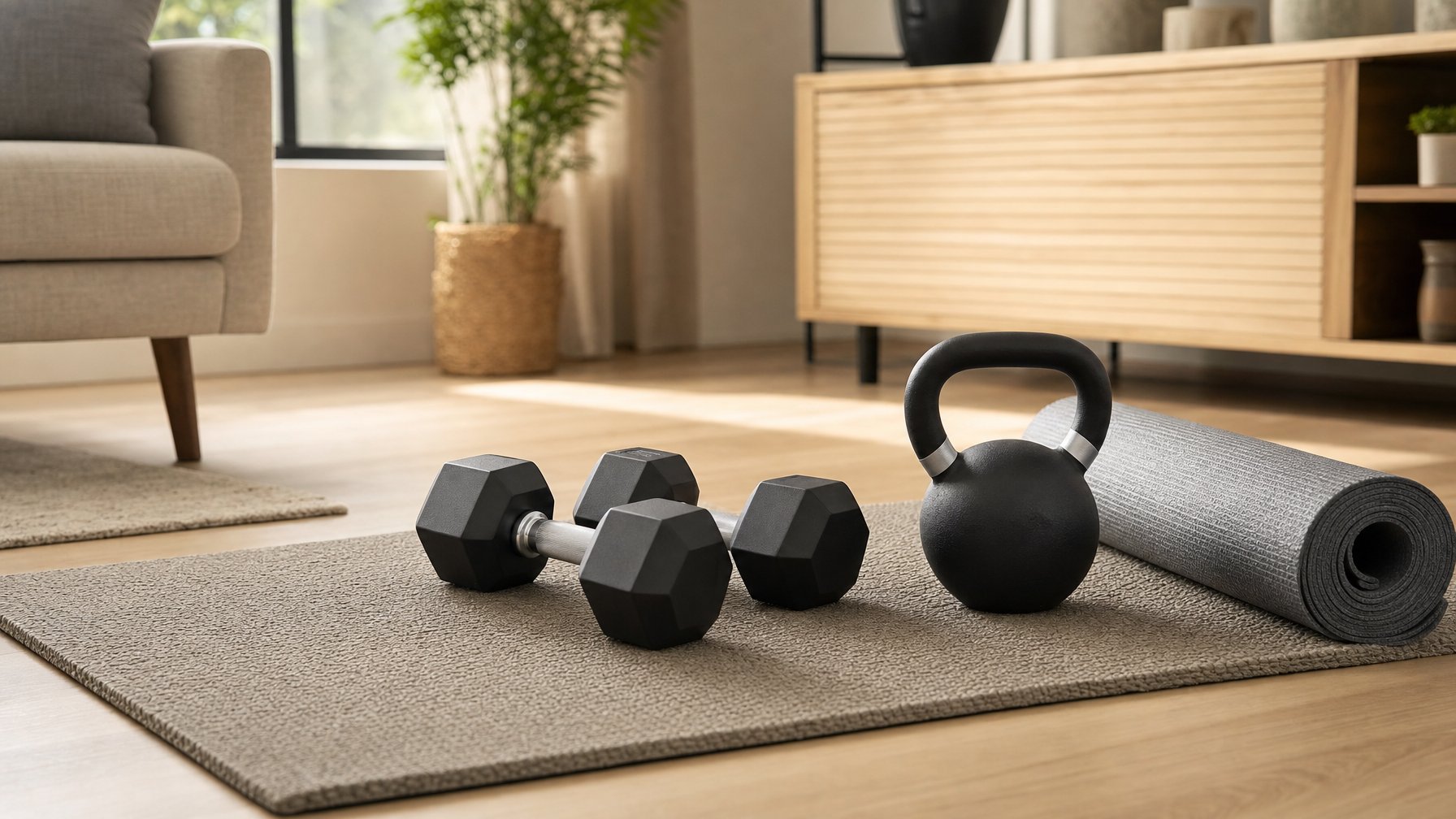
Most people who start losing weight lose muscle along with fat, and that lost muscle is hard to get back. Lifting weights two or three times a week changes the math: the scale moves more slowly, but a larger share of what leaves is body fat.
That tradeoff is the entire case for strength training for weight loss beginners. Fewer than 30% of American adults meet the minimum muscle-strengthening guidelines, according to CDC data cited in a beginner's primer on lifting, while about half hit the cardio targets.
The people who add two full-body sessions to their week are working with a tool most dieters skip entirely.
A beginner does not need a complicated program: two or three full-body sessions built around five movement patterns, a modest calorie deficit, adequate protein, and daily walking will cover almost everything that matters for the first six months.
Progress in the first weeks comes from learning the movements, not from loading the bar. Someone who spends three weeks getting comfortable with a goblet squat and a dumbbell row will add weight faster over the following year than someone who chased heavy numbers in week one and tweaked a lower back.
Key Takeaways
- Lifting preserves lean mass during a calorie deficit, which shifts weight loss toward fat loss.
- Two or three full-body sessions built on squat, hinge, push, pull, and carry patterns cover a beginner's needs.
- Small weekly increases in reps or load, plus real rest days and sleep, drive steady progress.
How Lifting Supports Fat Loss and Muscle Retention
Resistance training does not out-burn cardio during the session itself, and it does not need to. Its value during weight loss is protecting lean mass so the weight coming off is mostly fat, along with the strength, bone density, and mental health benefits that come with regular lifting.
Fat Loss vs. Weight Loss: Why the Difference Matters
Weight loss counts everything that leaves the body: fat, muscle, water, and glycogen. Fat loss counts only adipose tissue.
Two people can both drop 15 pounds. The one who lifted through the deficit keeps more lean muscle mass and ends up smaller at the same scale weight, because muscle is denser than fat.
Strength training helps preserve muscle while body weight decreases, improving the quality of fat loss, and it can reduce body fat on its own. Body composition is the number worth tracking, and a tape measure around the waist tells more about it than a morning weigh-in.
What Strength Training Can and Cannot Do for Metabolism
Muscle is more metabolically active than fat, so adding lean mass raises resting metabolic rate. The effect is real and modest, not the metabolic overhaul that fitness marketing suggests.
A pound of new muscle burns a handful of extra calories per day at rest. What matters more in practice is total calorie burn: the session itself, the elevated demand afterward, and the fact that stronger people move more throughout the day.
That last piece, non-exercise activity thermogenesis (NEAT), is where lifting quietly pays off. People who feel capable take the stairs and stay on their feet longer.
Why a Calorie Deficit, Protein, and Whole Foods Still Matter
Fat loss requires a calorie deficit. Lifting shapes what the body does inside that deficit; it does not replace it.
Protein intake is the other half of muscle retention. Without enough of it, the body breaks down muscle for fuel during a deficit, and the lifting stimulus has nothing to work with.
Build meals around whole foods, which is practical advice rather than moralizing: protein, fiber, and volume keep hunger manageable at lower calorie intakes. Anyone with a medical condition or on medication that affects appetite or blood sugar should work these numbers out with a clinician.
How Walking and Cardio Fit Into the Plan
Walking is the most underrated fat loss tool available to beginners. It adds calorie burn without adding recovery debt, so it never competes with lifting sessions.
Brisk walking outdoors or on a treadmill for 20 to 40 minutes on non-lifting days fits alongside two or three strength sessions easily. Cardio also improves work capacity, which means less time gasping between sets.
Your First Full-Body Training Plan
Two full-body workouts, alternated across two or three sessions per week, are enough to build a foundation. Both are built from compound movements that train several muscle groups at once, which is how a beginner gets the most from 40 minutes.
The Five Movement Patterns to Learn First
Every effective beginner program is five patterns wearing different equipment:
| Pattern | Beginner exercise | Gym alternative |
|---|---|---|
| Squat | Bodyweight squat | Goblet squat, leg press |
| Hinge | Romanian deadlift | Barbell deadlift |
| Push | Push-up | Dumbbell bench press |
| Pull | Dumbbell row | Lat pulldown |
| Carry/core | Plank | Farmer's carry |
Learn these and the exercise names stop mattering. A goblet squat and a leg press are the same pattern with different stability demands.
Workout A: Squat, Push, Pull, and Core
- Goblet squat or bodyweight squat : 2-3 sets of 8-12
- Dumbbell bench press or push-up : 2-3 sets of 8-12
- Dumbbell row : 2-3 sets of 8-12 per arm
- Dumbbell overhead press : 2 sets of 8-12
- Plank : 2-3 holds of 20-40 seconds
Beginners can start with 1 set per exercise and build to 2 or 3 over a few weeks. Most experts recommend starting with larger muscle groups before smaller ones, which is why squats come before curls.
Workout B: Hinge, Press, Legs, and Core
- Romanian deadlift (dumbbells) : 2-3 sets of 8-12
- Lat pulldown or assisted pull-up : 2-3 sets of 8-12
- Lunges or split squat : 2 sets of 8-10 per leg
- Chest press or incline push-up : 2 sets of 8-12
- Dead bug or crunch : 2 sets of 10-15
Finish with calf raises, bicep curls, or triceps work if time allows. These accessory moves are optional; the five patterns are not.
Home and Gym Exercise Swaps
A home gym needs less than most people expect. Bodyweight exercises get a true beginner through the first month, and a single pair of adjustable dumbbells plus resistance bands covers the next year.
Useful swaps: bands or a doorway row for the lat pulldown, elevated push-ups for the bench press, and a backpack loaded with books for weighted squats. Machines in a commercial gym offer more stability than free weights, which makes them a reasonable starting point for anyone nervous about form.
How to Progress Safely and Recover Well
Progress comes from adding a little challenge over time and letting the body absorb it. The pattern that works: pick weights that leave 2-3 reps in reserve, add reps before adding load, and treat rest days as part of the program.
Choosing Starting Weights, Reps, and RPE
For fat loss with muscle retention, use a weight that makes 8 to 12 repetitions challenging across 1 to 3 sets, resting 30 to 60 seconds between sets. Beginners do one set per exercise; two to three sets suit anyone past the first month.
Rate of perceived exertion (RPE) is the simplest self-check. Finishing a set at RPE 7 means two or three reps were left in the tank, and that is the right target for a beginner's working sets.
Find the weight by trial: start light, complete a set, add load until the last rep is difficult but clean. For muscular endurance, 12 to 16 reps with 20 to 30 seconds of rest works as well.
Progressive Overload Without Rushing the Load
Progressive overload means the training stimulus grows over weeks. Beginner gains come fastest from mastering form, tracking lifts, and adding small consistent overload rather than jumping loads every session.
A workable rule: when all sets hit the top of the rep range with good form, add the smallest available increment (2.5 to 5 pounds) and drop back to the bottom of the range. Training volume can also increase by adding a set.
Change one variable at a time. After six or more weeks of consistency, modifying weights, reps, exercise selection, or order keeps progress moving.
Warm-Up, Range of Motion, and Form Priorities
Five to ten minutes of light cardio or warm-up sets with an easy weight prepares the tissues and rehearses the movement. Skipping it is the most common beginner shortcut.
Full range of motion beats extra weight. A squat to depth with 25 pounds builds more than a quarter squat with 60, and the National Strength and Conditioning Association's certification standards treat technique as a prerequisite for load progression.
Move slowly enough that muscles, not momentum, do the work. Exhale through the hardest part of the rep. Anyone with a current injury or joint pain should get it assessed before loading the pattern.
Rest Days, Sleep, and Muscle Recovery
Muscle adapts between sessions, not during them. Train all major muscle groups on two non-consecutive days per week, leaving at least one rest day between full-body workouts.
Sleep is where most of the repair happens, and short sleep blunts both recovery and appetite regulation. Circuit training, moving between exercises with minimal rest, raises calorie burn per minute but demands more recovery, so beginners get better results from straight sets with honest rest periods.
Build the Habit, Then Build on It
Two full-body sessions a week for eight weeks beats an ambitious five-day plan abandoned in week three. The workout schedule that survives a busy month is the one producing strength gains six months from now.
Track sessions, weights, and reps in a notebook or app. Progress in fat loss shows up in tape measurements, waistbands, and the weight on the dumbbells long before it shows up as a dramatic number on the scale.
Add physical activity outside the gym: walking after meals, stairs instead of elevators. These small choices compound alongside the lifting and cost almost nothing in recovery.
Anyone managing a chronic condition, recovering from injury, or taking medication that affects exercise tolerance should bring their plan to a clinician before starting.
Frequently Asked Questions
Can I lose weight just by strength training?
Yes, resistance training can reduce body fat on its own, but the results depend on a sustainable calorie deficit. Lifting without attention to food intake builds strength and improves body composition while the scale stays put, which is a legitimate outcome but not weight loss.
Is 30 minutes of strength training enough for weight loss?
Thirty minutes is enough when the session covers compound movements and the effort is real. Five exercises at two sets each, with 30 to 60 seconds of rest, fits comfortably inside that window and hits every major muscle group.
How many days a week should a beginner lift weights to lose fat?
Two to three non-consecutive days per week suits most beginners, which supports learning, recovery, and steady progress. Adding walking on the off days increases weekly calorie burn without cutting into muscle recovery.
What is the 3-3-3 rule for strength training?
The 3-3-3 rule refers to 3 exercises, 3 sets each, 3 times per week, a minimalist template sometimes used to simplify beginner programming. Three compound lifts per session leaves gaps in pulling or core work, so a five-pattern full-body plan covers more ground in similar time.
Can beginners do strength training for weight loss at home?
Yes, strength training at home works well for the first several months using bodyweight exercises, resistance bands, or a single pair of adjustable dumbbells. The limiting factor arrives when bodyweight stops being challenging, at which point added resistance becomes necessary for continued progress.