Meal Prep for Weight Loss Beginners: Simple Guide
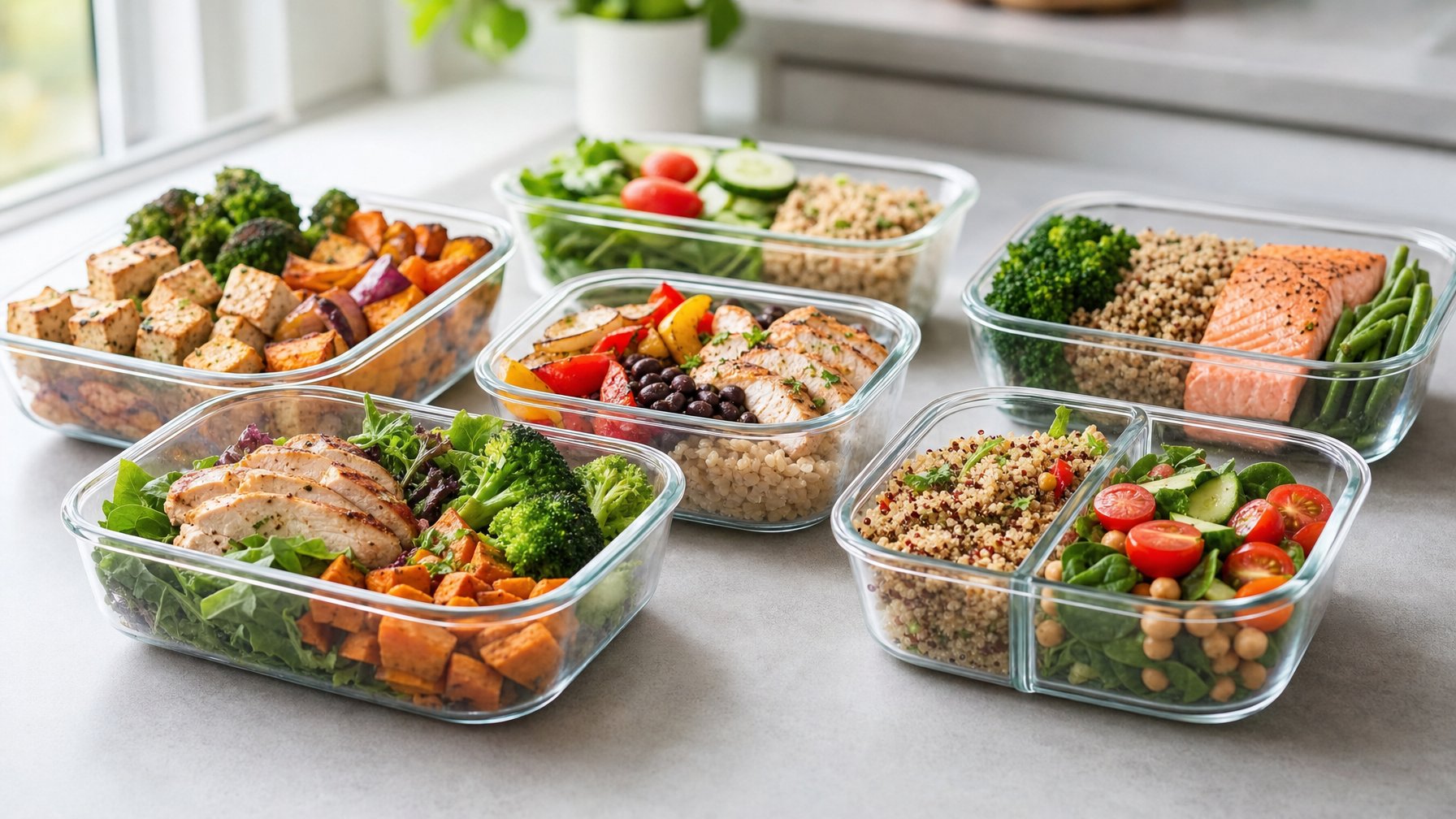
Meal prep for weight loss beginners works best when it starts small: two or three prepped meals a week, not twenty-one containers stacked in a fridge by Sunday night. The people who keep meal prepping for weight loss going past week three are rarely the ones with the most elaborate systems.
They are the ones who picked one meal that trips them up, usually lunch, and solved that meal repeatedly until it became automatic.
Prepped food supports weight loss goals by making the balanced option the fastest option, which matters most at 6 p.m. on a weeknight when takeout menus start looking reasonable. Healthy eating decisions made on a full stomach on Sunday tend to be better than the ones made on an empty stomach on Wednesday.
Nothing in a container burns fat on its own. A prepped meal still needs enough protein and fiber to hold hunger, a portion size that fits an energy intake below maintenance, and food a person wants to eat five days later. Get those three pieces right and the containers do their job.
Key Takeaways
- Prepped meals help most by controlling portions and protein intake, not by any special property of the food itself.
- A repeatable formula (protein + produce + carb + fat) removes the need for new recipes every week.
- Start with 2 to 3 meals, store them properly, and expand only after the routine holds.
How Preplanned Meals Support Sustainable Weight Loss
Preplanned meals support weight loss by making a calorie deficit easier to hold without daily decision fatigue. Portion sizes get decided once, in a calm kitchen, with the whole batch in front of you.
Protein and fiber get built in deliberately instead of being whatever happened to be available.
How a Calorie Deficit Fits Into a Flexible Meal Prep Routine
Weight loss requires eating fewer calories than the body uses, and meal prep is a delivery system for that deficit. Cutting back on nutrient-poor, high calorie foods while adding physical activity can create a calorie deficit without a strict diet, which sidesteps the restriction-rebound cycle.
Very low calorie diets delivering 1,000 to 1,200 calories per day produce fast loss, and the weight tends to return once normal eating resumes. Be cautious with downloadable meal plans capped under 1,500 calories per day.
A registered dietitian or physician can set a calorie range appropriate for a specific body and activity level.
Counting calories is optional. Choosing filling foods, composing balanced meals, and eating according to hunger signals works for many people.
Why Protein, Fiber, and Healthy Fats Help You Feel Full
Protein is the most filling macronutrient and helps preserve lean muscle mass during a deficit — see high-protein meals for weight loss for plate ideas. That is why a chicken breast and broccoli container holds satiety longer than a pasta salad of identical calories.
Fiber from non-starchy vegetables, beans, and whole grains adds volume and slows digestion. Healthy fats from olive oil, avocado, nuts, and seeds make meals palatable enough to eat again on day four.
A useful check: if a prepped lunch leaves someone hungry 90 minutes later, the fix is usually more protein or more vegetables, not smaller portions.
Portion Control Without Turning Every Meal Into a Math Problem
Container geometry handles most portion control. A three-compartment container with the largest section for vegetables, one section for lean protein, and one for complex carbohydrates produces a reasonable plate without a food scale.
Hand-based estimates work when containers are not available: a palm-sized portion of protein, a cupped handful of cooked grains, a thumb of fats, and vegetables filling whatever space remains.
Weighing protein and carbohydrate portions for the first two weeks recalibrates the eye. Most people stop weighing after that and stay accurate enough.
What Meal Prep Can and Cannot Do for Weight Loss
Meal prep controls what is available and how much. It does not control sleep, stress, alcohol, weekend restaurant meals, or the handful of candy from a coworker's desk.
Prepped meals reduce reliance on fast food and cut added sugar intake by default, since packaged convenience food carries most of both. They also improve hydration indirectly, because people who plan meals tend to plan beverages.
They cannot override a consistent surplus. Someone eating four prepped meals plus two takeout dinners has changed their grocery bill more than their intake. When cooking time is the bottleneck instead, compare prepared meal delivery for weight loss as an alternative to DIY containers.
Build Your First Week of Balanced Meals
A first meal prep plan needs five decisions: which meals to prep, which prep style fits the week, a formula for building each plate, a grocery list built from that formula, and a plan for the leftovers.
Two proteins, three vegetables, and two carbohydrate bases cover a week of lunches and dinners without repetition fatigue.
Choose a Prep Style That Matches Your Schedule
Three styles cover most schedules, and mixing them is normal.
| Style | Time needed | Best for |
|---|---|---|
| Full batch cooking | 2 to 3 hours, one day | Fixed weekday schedules, five identical lunches |
| Component prep | 60 to 90 minutes | People who want variety; cook proteins, grains, and vegetables separately and assemble daily |
| Double-batch dinners | 15 extra minutes per meal | Anyone who cooks most nights and wants tomorrow's lunch handled |
Beginners do well with component prep. Nothing is committed to a single flavor profile, so Tuesday's chicken and rice becomes Thursday's chicken salad with cucumber and cherry tomatoes.
Use a Simple Protein, Produce, Carb, and Fat Formula
Every meal gets one item from each column. This removes recipe hunting entirely.
- Lean protein: chicken breast, lean ground turkey, salmon, eggs, tofu, black beans, chickpeas, lentils, Greek yogurt, cottage cheese
- Produce: broccoli, spinach, kale, bell peppers, zucchini, carrots, tomatoes, cauliflower rice, frozen vegetables
- Complex carbohydrates: brown rice, quinoa, rolled oats, sweet potatoes, corn, squash
- Healthy fats: olive oil, avocado, nuts, seeds, chia seeds, hummus, peanut butter
Non-starchy vegetables can be used generously; starchy vegetables like sweet potatoes count as the carb slot.
Create a Budget-Friendly Grocery List
Meal prep for weight loss on a budget runs on frozen produce, dried legumes, eggs, and whatever protein is on sale. Frozen and canned fruits and vegetables last longer and cost less than fresh, and frozen broccoli or spinach has no prep time attached.
Build the shopping list from the formula above, then check seasonal produce for the fresh items. Lentils, dried black beans, oats, and eggs anchor the cheapest weeks.
One rule prevents waste: buy nothing without knowing which meal it goes into.
Plan Breakfasts, Lunches, Dinners, and Snacks Without Overprepping
Prep the meal that fails most often. For most people that is lunch or breakfast, both eaten under time pressure.
Breakfast meal prep is the highest-return category because it is the most repeatable. Overnight oats made with almond milk, chia seeds, and berries, or egg muffins baked in a muffin tin, cover five mornings as grab-and-go meals.
Dinners rarely need full prep. Prepped components plus 10 minutes of assembly beats a reheated fifth container of the same thing.
Snacks should be bought, not cooked: Greek yogurt, hummus with carrots, cottage cheese, a handful of nuts.
Easy Mix-and-Match Meal Ideas for Beginners
| Protein | Carb | Produce | Fat/finish |
|---|---|---|---|
| Ground turkey, taco-seasoned | Brown rice | Bell peppers, black beans, tomatoes | Avocado, salsa |
| Chicken breast, lemon-oregano | Quinoa | Broccoli, cherry tomatoes | Olive oil, feta |
| Baked salmon | Sweet potato | Spinach, zucchini | Olive oil, lemon |
| Tofu, soy-ginger | Cauliflower rice | Carrots, bell peppers | Sesame seeds |
| Chickpeas | Quinoa | Cucumber, tomatoes, kale | Hummus, olive oil |
Each row makes four servings from roughly 35 minutes of active cooking.
How to Keep Repeated Meals From Getting Boring
Change the sauce, keep the food. The same chicken and rice becomes distinct meals with pesto, salsa verde, peanut sauce, or a mustard vinaigrette stored separately.
Texture matters more than people expect. Add something crunchy at serving time: pumpkin seeds, sliced cucumber, chopped raw bell pepper.
Prepping four days instead of seven also solves boredom. By day five, most prepped food has lost the appeal it had on day one.
Cook, Portion, Store, and Reheat With Confidence
Cooking order determines how long prep day takes: start the longest items first and use the oven and stovetop simultaneously. A 90-minute session produces a week of components when the oven runs sweet potatoes and chicken while grains simmer and vegetables get chopped.
A Beginner-Friendly Batch-Cooking Order
- Preheat the oven to 400°F and start anything roasted: sweet potatoes, chicken breast, broccoli, bell peppers, zucchini.
- Start grains. Brown rice takes 45 minutes, quinoa 15. Both cook unattended.
- Start a slow cooker dish if one is planned: turkey chili or lentil soup goes in now, seasoned with cumin and garlic.
- Cook stovetop proteins. Ground turkey, tofu, or salmon fillets take 10 to 20 minutes.
- Wash and chop raw produce while everything cooks: spinach, carrots, cucumber, cherry tomatoes.
- Cool everything, then portion. Hot food in a sealed container creates condensation and shortens shelf life.
How to Portion Meals for Your Needs
Portion the entire batch immediately after cooling. Leaving a tray of chicken in the fridge to be divided later reliably turns into uneven servings.
Individual meal prep containers work for structured eating. A family-style approach (large containers of each component, portioned at serving time) suits people whose hunger varies day to day or who are eating for muscle gain and weight loss at once.
Label each container with the contents and the date. This takes 20 seconds and prevents the mystery-container problem.
Which Foods Belong in the Fridge or Freezer
| Food | Refrigerator | Freezer |
|---|---|---|
| Cooked chicken, turkey, salmon | 3 to 4 days | 2 to 3 months |
| Cooked rice, quinoa | 4 days | 1 to 2 months |
| Turkey chili, lentil soup | 3 to 4 days | 3 months |
| Roasted vegetables | 3 to 4 days | Poor texture; skip |
| Egg muffins | 4 days | 2 months |
| Cut raw produce | 3 to 5 days | Not recommended |
| Overnight oats | 4 to 5 days | Not recommended |
Soups, chilis, and cooked grains freeze best. Roasted broccoli and cucumber do not.
Food Safety Rules for Prepared Meals
Refrigerate cooked food within two hours, or one hour if the kitchen is above 90°F. Cook poultry to 165°F and ground turkey to 165°F, verified with a thermometer.
Use airtight containers, glass or stainless steel, and keep the refrigerator at 40°F or below. Reheat leftovers to 165°F throughout, stirring midway in a microwave so cold spots do not survive.
Food held longer than four days in the fridge goes in the freezer on day two, before quality drops.
Meal Prep Recipes That Reheat Well
Braises, stews, and saucy dishes improve overnight. Turkey chili with black beans and cumin, lentil soup with carrots and ginger, and chicken thighs in tomato sauce all taste better on day three.
Egg muffins with spinach and bell peppers reheat in 45 seconds and hold texture for four days. Baked sweet potatoes reheat cleanly; roasted zucchini does not.
Keep dressings, avocado, and fresh greens separate and add them at serving time.
A Small, Repeatable Routine Beats a Perfect Plan
Weight loss meal prep succeeds on repetition, not ambition. A beginner who preps two lunches and one breakfast every week for a year has done more for their weight loss goals than someone who executes a flawless 21-meal plan for two weeks and abandons it.
Start with the formula: lean protein, produce, a complex carbohydrate, a healthy fat. Buy frozen vegetables when fresh is expensive, portion the batch while it is still on the counter, and label every container with a date.
Healthy meal prep is a scheduling tool applied to nutrition. The weight change comes from the energy balance those meals create over months, alongside physical activity, sleep, and everything else outside the container.
This article is educational and does not replace individualized medical or nutrition advice. Anyone with a medical condition, on medication, pregnant, or with a history of disordered eating should speak with a physician or registered dietitian before changing their diet.
Frequently Asked Questions
What is the easiest meal prep for weight loss beginners?
Cooking one protein, one grain, and one vegetable in bulk and combining them differently each day is the lowest-effort starting point. Roast chicken breast and broccoli on a sheet pan while brown rice cooks, then change the sauce daily.
This takes about 45 minutes and covers four lunches.
Can you lose weight just by meal prepping?
Meal prepping supports weight loss by controlling portions and food quality, and it produces results only when total intake stays below energy needs. Prepped meals eaten alongside regular takeout or large weekend meals will not create a deficit.
Pair the prep with an appropriate calorie range set by a clinician.
How many days of meals should a beginner prep at once?
Three to four days is the practical limit for a first attempt. Most cooked proteins and vegetables keep 3 to 4 days in the refrigerator, and food quality drops noticeably by day five.
Prepping twice a week, Sunday and Wednesday, keeps meals fresher than one large Sunday session.
What is the 3-3-3 rule for meal prep?
The 3-3-3 rule refers to preparing three proteins, three carbohydrates, and three vegetables in a single session, then mixing them into different combinations across the week. It produces nine base components and roughly 27 possible plate combinations.
Beginners often start with a 2-2-2 version to cut prep time in half.
How can I meal prep for weight loss on a budget?
Build meals around dried lentils, black beans, chickpeas, eggs, oats, and frozen vegetables, which cost less per serving than fresh produce and pre-cut proteins. Frozen and canned produce lasts longer and reduces waste.
Buy proteins on sale and freeze portions immediately.
How do I meal prep to lose weight while gaining muscle?
Keep protein high at every meal, roughly a palm-sized or larger portion, and pair a moderate calorie deficit with resistance training two to four times a week. Higher protein intake helps preserve lean mass during weight loss.
A registered dietitian can set protein and calorie targets matched to body weight and training volume.